The Butterfly Effect · E-commerce: apparel & jewellery · Direct-to-consumer, online
An e-commerce operating system, built inside the tools the team already ran.
The Butterfly Effect is a direct-to-consumer brand where every order funds twenty meals. Imperium installed its operating layer in April 2026, inside Notion and the brand's existing stack, with Claude underneath.

1.7M+
meals funded by the brand's customers, per the public counter on its store (September 2026)
3
operating systems in the build: one for each founder, one company-wide, always on
1
front door for the team, Notion, the hub they already used, kept as the interface
The company
The Butterfly Effect sells necklaces, bracelets, T-shirts, hoodies and sweatpants under one promise: wear love, spread love. Every product bought funds twenty meals through giving partners in Africa and India, and the counter on the store stands at 1.7 million meals and thirty thousand customers, rated 4.9 stars. The brand was started by Lee Hutchinson, a magician turned creator with an audience in the millions, after a job in Rajasthan put billionaires and barefoot children a few metres apart.

It is a modern direct-to-consumer business: a Shopify store in nine languages, email flows, paid social at volume, a distributed team across Southeast Asia, India and beyond, and a founder audience that generates thousands of comments and messages a day. The brand runs giving trips around the world and films every step, so the content side never stops either.

The problem
A brand at that pace runs on a dozen tools that never talk to each other. The store, the email platform, ad attribution, the ad accounts, team chat, shared drives, and Notion for operations. Every morning meant logging into each of them in turn to work out what happened yesterday. The knowledge of how the business actually ran lived in the founders' heads and in recorded walkthroughs, so every new hire started from zero and every question came back to the person at the top. The brief was time, not automations: a command centre the operator could trust, and a way to hand what he knew down to the team without repeating it.
What we built
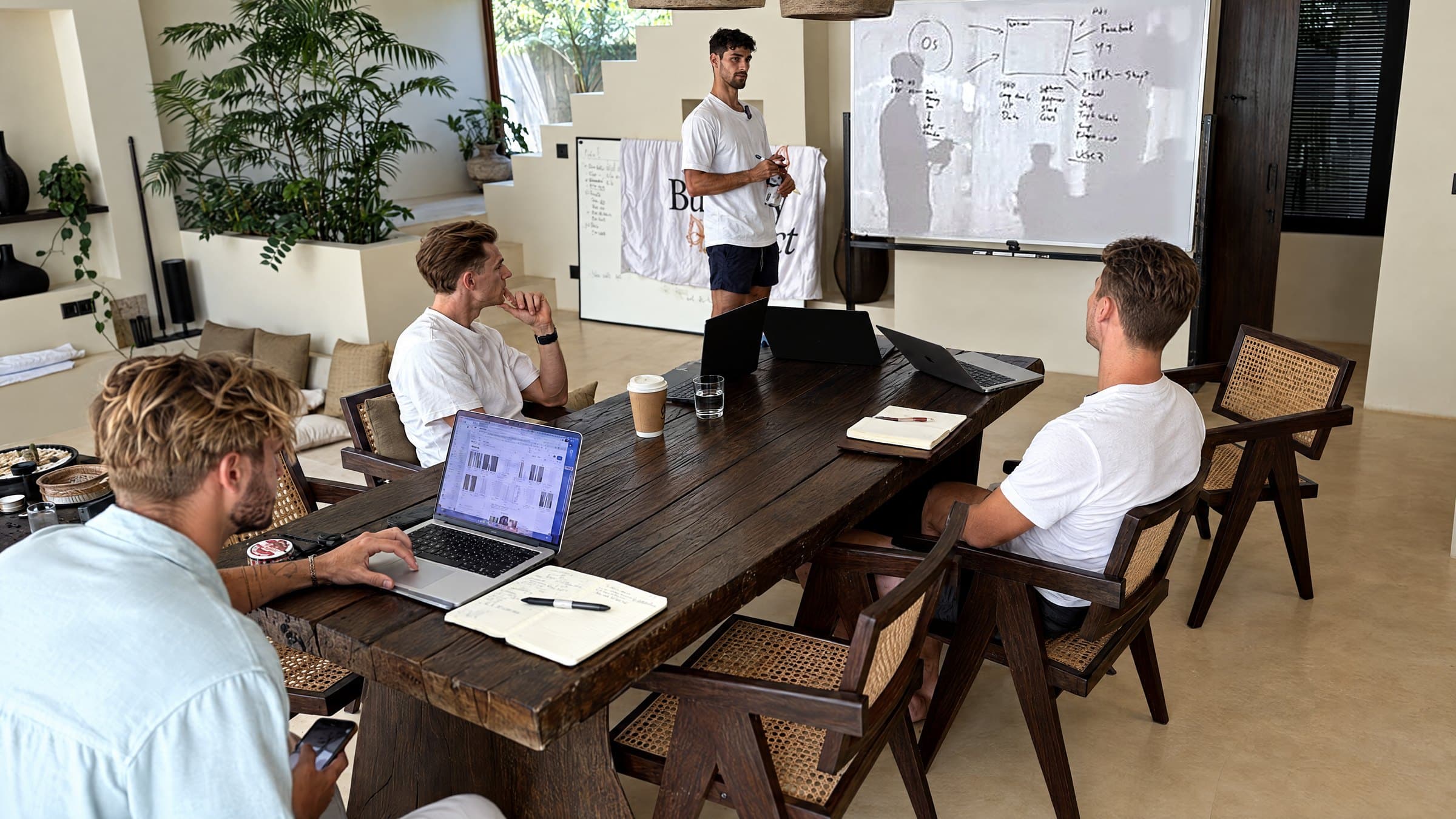
We did not replace the stack. The operating layer went in around it. Notion stayed the company hub, the place the whole team already looked for dashboards, reports and tasks, and Claude became the intelligence underneath it, with a file-based memory that holds what the business knows and is not tied to any one model. Two personal operating systems, one for each founder, sit on top of a company operating system that runs around the clock and reports into Notion. The figure below is the shape of it.
The store, email, attribution, ad accounts, Google Workspace and Slack were connected in, and the day was rebuilt around them. A morning briefing lands before the team is in: yesterday's revenue, ad performance, the chase list, team activity, the customers who need attention, and inventory alerts for any product running low on cover, so a reorder is a decision and not a surprise. A failed-payment sweep drafts the recovery emails. Customer messages are triaged twice a day. Comments and DMs are sorted so the valuable ones reach the founder and the rest still get an answer. Every seat files an end-of-day report into Notion, and a weekly digest closes the week.
Underneath all of it sits the knowledge work: in-depth interviews with both founders, structured into the memory so the system answers the way the business would, in the brand's own voice. A quality gate scores every output before it is delivered.

Where it lands
The brief from the start was in-house ownership. The brand's technical lead sat in every setup session, was trained on the whole architecture, and now onboards new hires into the company system and extends it. Directors join with their own seat, inherit the brand's memory on day one, and the founders' time goes back to the two things only they can do: the product and the audience. This is what an operating system looks like for e-commerce: inventory, orders, customers and ads on one screen, inside the tools the team already knows.

Photographs: The Butterfly Effect, thebutterflyeffect.com. Build session: Imperium.
News
- DocumentaryHow a property developer avoided ten hires in sixty days12 min · Sixty days inside GeoNet, a developer with three brands going construction ready at once, as the AI Operating System goes in across the whole team.Watch
- Podcast · 30 August 2026Shanny Poijes on running seventeen villas with one employeeEpisode 16 · 60 minRead more
- MastermindsThe rooms we run, uncut.Operators in a room, their businesses taken apart on the whiteboard, published in full.Read more
- Blog · 4 September 2026We ship engineers, not software7 min readRead more
The Butterfly Effect runs Imperium's AI Operating System. An e-commerce operating system, built inside the tools the team already ran. The facts on this page come from the company's public store and from the engagement itself.